
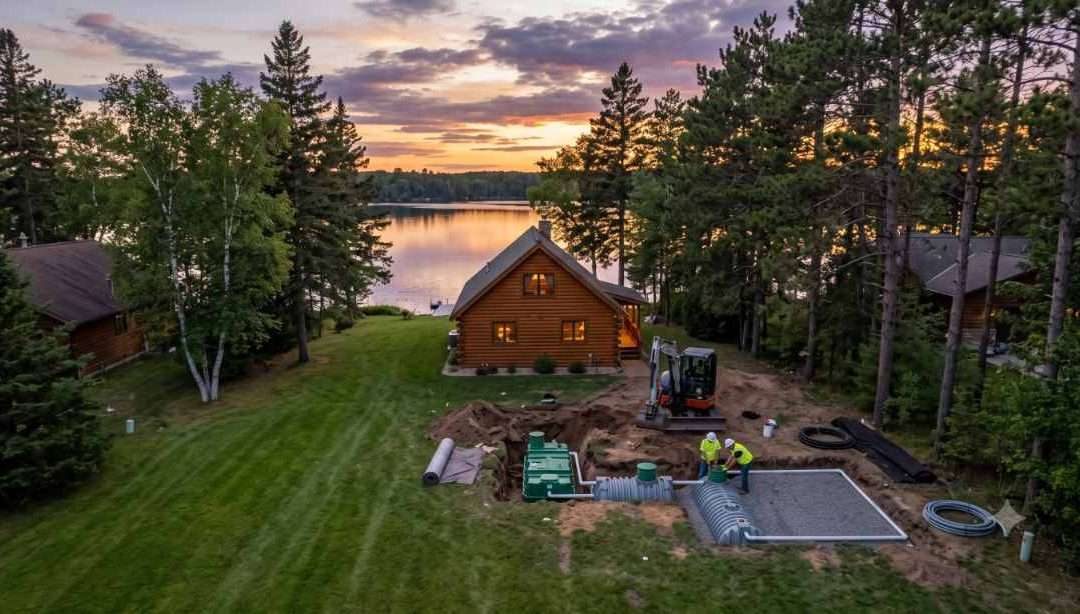
Building or remodeling on small, historic lake lots in Alexandria and the Brainerd Lakes area presents significant engineering challenges. Properties surrounding lakes like Lake Mary, Lake Victoria, or Gull Lake were often platted decades ago when wastewater standards were minimal. Today, high water tables, shallow soil layers, and tight lot dimensions make installing a standard gravity septic drain field impossible on many of these sites.
To obtain a building permit or complete a major renovation on a restricted lot, you must present a code-compliant wastewater solution. Minnesota Pollution Control Agency rules and local county ordinances offer three primary options for difficult sites: Mound systems, Type IV advanced treatment systems, and holding tanks.
Comparison of Restricted Lot Septic Options
| System Type | Average Installation Cost | Space Required | Best Use Case |
| Mound System | $15,000 – $30,000 | High (requires elevated sand bed) | Sites with high water tables but adequate lot acreage. |
| Type IV Advanced System | $20,000 – $40,000+ | Moderate to Low | Small or sloped lots with poor soil or tight setbacks. |
| Holding Tank | $7,000 – $14,000 | Minimal | Extremely small lots where no drain field can physically fit. |
Navigating Space Limitations and Water Tables
When a lot lacks sufficient area or depth of natural soil, standard trenches cannot properly filter wastewater before it reaches the groundwater table. A mound system solves the water table issue by lifting the absorption bed above the ground surface using clean imported sand. However, the physical footprint of the mound can dominate a small yard.
On properties where a mound takes up too much space, advanced treatment technology becomes necessary. These engineered systems treat the wastewater inside specialized tanks using aerobic bacteria or synthetic filters before releasing cleaner liquid into a much smaller soil area.
Frequently Asked Questions
What happens if my lake lot is too small for a standard septic drain field?
If your lot cannot accommodate a standard gravity drain field, you must install an engineered alternative system. A designer will evaluate your soil borings and site dimensions to determine if a mound system, a Type IV advanced treatment system, or a sealed holding tank is required by county code.
How much does a holding tank cost to install and pump seasonally?
Installing a concrete or fiberglass holding tank typically costs between $7,000 and $14,000. Pumping costs depend on usage and tank size, usually running $250 to $450 per pump-out. For a seasonal cabin with regular weekend use, annual pumping fees generally range from $1,500 to $3,500.
What is a Type IV septic system and why is it used on difficult lakefront lots?
A Type IV system is an advanced wastewater treatment setup that uses aerobic treatment units, peat filters, or sand filters to treat sewage to a high standard before discharging it. Because the liquid is pre-treated, local codes allow the final soil dispersal area to be significantly smaller than a standard drain field, making it ideal for tight, restricted sites.
Can I install a septic system within the 75-foot lake setback?
Standard septic tanks and drain fields must generally sit at least 75 to 100 feet back from the ordinary high water level depending on the lake classification. On non-conforming, historic lots where meeting this setback is physically impossible, counties may grant a variance for an advanced Type IV system or a sealed holding tank closer to the lake, provided it meets strict structural and leak-testing requirements.
How often does a mound system need to be inspected by the county?
State rules require all septic systems to be assessed at least once every three years. However, Douglas and Crow Wing counties often require annual operating permits and annual service reports for mound systems and any system using mechanical pumps or advanced treatment components.
Selecting and permitting a septic system on a restricted lake lot requires coordinating soil science, local zoning laws, and home design. Wensmann Contractors works directly with certified septic designers and county environmental services in Douglas, Crow Wing, and Stearns counties. We ensure your site plan, foundation, and wastewater infrastructure align before breaking ground.
By: Wensmann Contractors Team Last Updated: August 4, 2026
Greg Wensmann, 2021 CMBA Builder of the Year, specializes in custom home construction, lakeshore site development, and complex residential remodeling across Central Minnesota.